Rings of Solar System Planets
Jupiter
Jupiter's ring system was discovered in 1979 by the Voyager 1 spacecraft. It is much fainter than Saturn's rings and consists mainly of dust particles. The rings are thought to be created by material ejected from Jupiter's small moons due to meteorite impacts.
Saturn
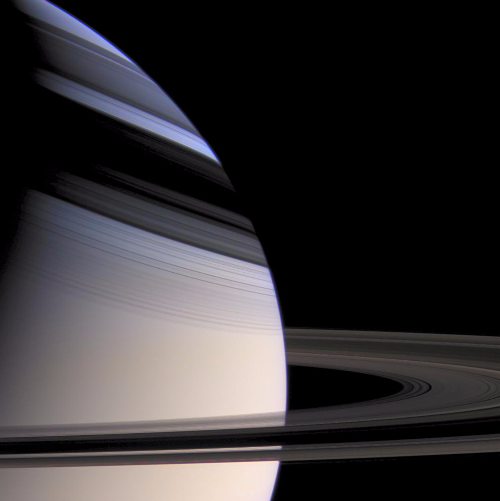
Saturn has the most prominent and extensive ring system in the Solar System. The rings are easily visible from Earth with a small telescope. They are made primarily of water ice particles, with some rocky debris and dust. The ring system extends up to 282,000 km from the planet's center, though they are remarkably thin - only about 10 meters thick in most places.
Uranus
Uranus has 13 known rings, discovered in 1977. Unlike Saturn's bright icy rings, Uranus's rings are dark and narrow, composed of larger particles and some dust. The rings are relatively young, possibly only a few hundred million years old.
Neptune
Neptune has 5 main rings, discovered in 1984. The rings are faint and dark, similar to those of Uranus. Some of Neptune's rings have unique arc-like structures where material is concentrated in specific sections rather than being evenly distributed.
February 16 2026